US & Caribbean · A Crisis Accelerating Since 2011

The Sargassum Crisis Finding solutions for one of the ocean's most urgent emergencies

Every year, tens of millions of tons of sargassum wash ashore — smothering reefs, closing beaches, and releasing toxic gases into coastal communities. Project Blue Horizon exists to change that.

Scroll

What Is Sargassum — and Why Does It Matter?

Sargassum is a type of free-floating seaweed native to the Atlantic. In its natural state, it plays a vital ecological role — providing habitat, nursery grounds, and feeding areas for hundreds of marine species. Historically, the Sargasso Sea was its home, a calm, gyre-contained ecosystem far from shore.

That balance broke around 2011, when unprecedented blooms began forming across the tropical Atlantic. What emerged — now called the Great Atlantic Sargassum Belt — is a new, persistent, and growing feature of our ocean: a mass of biomass sometimes stretching longer than the continental United States.

When this seaweed reaches shore, the consequences are severe. It decomposes rapidly, releasing hydrogen sulfide gas — a toxic compound that causes respiratory distress, neurological symptoms, and dangerous air quality. It smothers the shallow-water ecosystems that anchor Caribbean and Florida coastal economies.

This is no longer a seasonal nuisance. It is a structural, transboundary environmental crisis — and it is getting worse every year.
10–35M
Metric tons of sargassum biomass estimated annually in the Great Atlantic Belt
$3.5B
Annual economic damage in South Florida alone — from tourism loss, cleanup costs, and property impacts
40–70%
Share of coastal GDP in Caribbean nations that depends on tourism — directly threatened by sargassum
2011
The year the crisis began accelerating — and has shown no signs of reversing

What Sargassum
Does to Our Coasts

When blooms make landfall, the harm cascades across ecosystems, communities, and economies simultaneously.

🪸

Coral Reefs & Marine Life

Dense mats block sunlight reaching the seafloor, causing coral bleaching and die-offs. Seagrass beds suffocate. Mangrove forests are overwhelmed. Hypoxic dead zones kill fisheries that entire communities depend on.

💨

Air Quality & Public Health

Decomposing sargassum releases hydrogen sulfide (H₂S) — a gas that in sufficient concentrations causes headaches, respiratory illness, and neurological damage. Coastal residents and workers face chronic exposure during bloom seasons.

💧

Groundwater Contamination

Sargassum contains naturally occurring arsenic. As it decomposes, arsenic leaches into coastal soils and groundwater supplies — a slow-moving contamination threat that is poorly understood and underreported.

🏖️

Tourism & Livelihoods

Beach closures, foul odors, and visual blight drive away visitors. Hotels lose occupancy. Restaurants close. In regions where 40–70% of GDP depends on coastal tourism, the economic blow can be existential for communities.

🏠

Property & Infrastructure

Coastal property values decline as sargassum becomes associated with a location. Rising insurance premiums, accelerated infrastructure corrosion from H₂S, and deferred investment compound the damage year after year.

🏛️

Municipal Budgets

Local governments bear enormous cleanup costs with no tools to prevent the problem at source. Municipalities are trapped in a losing cycle of reactive spending — without a long-term fix in sight.

A Crisis
Without a Ceiling

Three converging forces are driving sargassum growth — and none of them show signs of reversing on their own.

01

Nutrient Loading

Industrial agriculture has dramatically elevated nitrogen and phosphorus in river systems draining into the Atlantic — particularly from the Amazon, Mississippi, and West African basins. These nutrients act as fertilizer for sargassum on a continental scale, enabling blooms orders of magnitude larger than anything historically observed.

02

Rising Ocean Temperatures

Warming surface waters extend the active bloom season across more months and expand the geographic zones where sargassum can thrive. Climate change is not a future threat here — it is an active, measurable accelerant of the crisis happening right now.

03

Altered Ocean Currents

Shifts in the North Equatorial Recirculation Region are redirecting bloom pathways toward the most populated and economically vulnerable coastlines. What once drifted harmlessly offshore is now reliably delivered to shore season after season.

⚠️

Left unchecked, every one of these drivers compounds the others

More nutrients fuel larger blooms. Warmer temperatures sustain them longer. Altered currents deliver them to more coastlines. Without active intervention, the trajectory is one of worsening impact, cascading ecological damage, and deepening harm for millions of people across the US and Caribbean. This is why Blue Horizon believes we cannot wait for a natural correction that may never come.

Who We Are &
Why We Exist

Project Blue Horizon is a multi-stakeholder coalition dedicated to finding, developing, and scaling real solutions to the sargassum crisis. We bring together research institutions, technology developers, government bodies, environmental organizations, and private sector partners under a shared mission.

We are not a cleanup crew. We are not a lobbying group. We are a solutions-focused coalition that believes this crisis demands systemic, science-backed answers — and that no single actor can solve it alone.

🔭

Understand the System

Commission and synthesize research on bloom formation, movement, and ecological impact so that every intervention we pursue is grounded in rigorous science.

🤝

Convene the Right People

Bring together governments, scientists, communities, and the private sector — because lasting solutions require coordination across all of them.

⚙️

Build Real Solutions

Move beyond awareness into action — testing, piloting, and scaling the interception, processing, and prevention approaches that can actually reduce sargassum harm.

🌎

Make It Sustainable

Design solutions that are economically self-sustaining — so that sargassum management doesn't depend indefinitely on emergency funding or government subsidies.

"We believe that a crisis of this scale — touching ecosystems, economies, and human health across an entire ocean basin — demands a response equal to its scope. That's what we're building."
— Project Blue Horizon Coalition
Global Bridges Group
Reef Research & Design
Jacoby Development

Our Approach to
Finding Solutions

Effective solutions require working at every level — from the science to the technology to the coalitions that make lasting change possible.

01 — Science

Evidence-Based Understanding

We fund and synthesize research on bloom dynamics, ecological impact, and human health effects — ensuring every solution is grounded in the best available science.

02 — Technology

Intercept Before Impact

We support satellite monitoring, AI-powered forecasting, and offshore harvesting systems that can intercept blooms before they reach shore — tackling the problem at the source, not the symptom.

03 — Economy

Create Sustainable Value

Harvested sargassum can become fertilizer, biochar, biogas, and more. Economic value from the biomass is what makes long-term, self-sustaining management viable for communities.

04 — Coalition

Coordinate Across Borders

Sargassum does not respect borders. We build governance structures, public-private partnerships, and international coalitions that match the true scale of this crisis.

To protect the coastlines,
ecosystems, and communities of the
US and Caribbean

Project Blue Horizon is committed to confronting the sargassum crisis with the urgency, science, and cross-sector collaboration it demands. We exist to move the conversation from alarm to action — convening the researchers, technologists, policymakers, and communities needed to build solutions that are real, lasting, and equal to the scale of this emergency.

We believe healthier oceans and resilient coastal economies are not competing goals — they are the same goal.

Science-Led
Coalition-Driven
Community-Centered
Economically Sustainable
Action-Oriented

Our Leadership Team

Blue Horizon is led by a coalition of seasoned professionals with over 200 combined years of experience across environmental science, real estate development, marine research, and public policy. They share one conviction: this crisis is solvable.

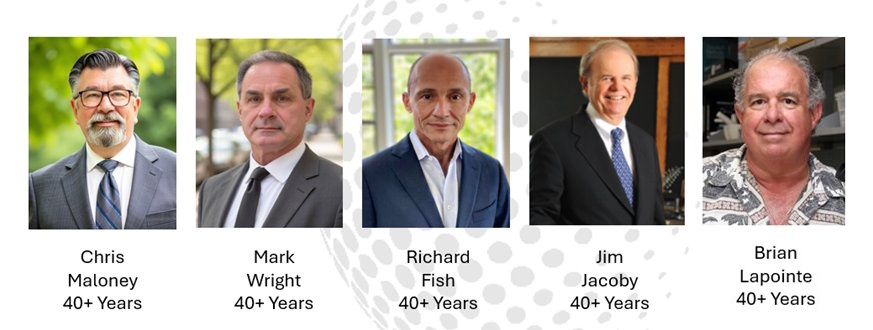
Blue Horizon Leadership Team — Chris Maloney, Mark Wright, Richard Fish, Jim Jacoby, John Loudon, Brian Lapointe
Blue Horizon Coalition Leadership — Combined 230+ Years of Experience
40+
Chris Maloney
40+
Mark Wright
40+
Richard Fish
40+
Jim Jacoby
35+
John Loudon
40+
Brian Lapointe

Help Us Turn the Tide

Whether you're a scientist, a policymaker, a community leader, or an organization that cares about ocean health — there's a place for you here. The sargassum crisis is solvable. But not alone.

🔬

Research & Science

Bring expertise in oceanography, marine biology, environmental health, or remote sensing. We need the science community at the table shaping what we do.

🏛️

Government & Policy

Municipal, state, and national governments facing sargassum impacts can access our coalition's resources, data, and coordinated response frameworks.

🌱

Community & Environment

Frontline communities and conservation organizations are essential voices in shaping solutions that actually work for people — not just on paper.

Reach the Blue Horizon Coalition

info@bluehorizon.dev